Skip to content
Illustration eines goldenen Wolfs auf transparentem Hintergrund

Native Roots

  • Facts about Native AmericansExpand
    • Notable Figures
  • Native American ToolsExpand
    • Dreamcatcher
    • Drums
Illustration eines goldenen Wolfs auf transparentem Hintergrund
Native Roots
  • Native American: 🎨 The Art of the Body: From Māori Tā moko to Traditional Body Painting in Africa
    Cultural Diversity

    🎨 The Art of the Body: From Māori Tā moko to Traditional Body Painting in Africa

    ByWildflowerSoul January 30, 2026January 6, 2026

    In many Indigenous cultures, body art is not decoration but language. The body becomes a living archive, carrying stories of ancestry, responsibility, spirituality, and resistance. From the precise lines of Māori Tā moko to the symbolic body paintings of African communities, identity is visibly embodied. 🌀 Tā moko: Living Genealogy of the Māori Tā moko…
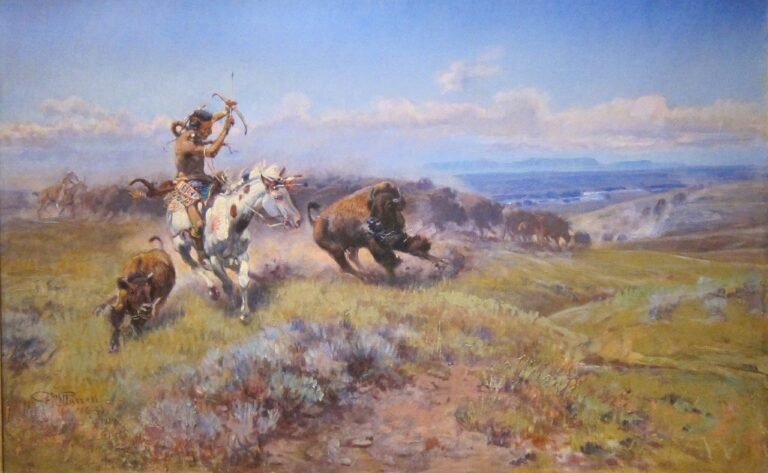
    Read More 🎨 The Art of the Body: From Māori Tā moko to Traditional Body Painting in AfricaContinue

  • Indigenous Culture: 🏹 Die San Südafrikas: Überleben zwischen Tourismus, Landverlust und alter Jägerkultur
    Indigenous Peoples

    🏹 The San of South Africa: Surviving Between Tourism, Land Loss, and Ancient Hunter Culture

    ByWildflowerSoul January 30, 2026January 4, 2026

    The San, also known as Bushmen, are among Africa’s oldest indigenous peoples. Their lifestyle revolves around traditional hunting, gathering, and deep knowledge of flora, fauna, and the environment. Today, they face challenges such as land loss, tourism pressure, and modernization. Historical Background The San have lived for millennia in the Kalahari region and surrounding areas….

    Read More 🏹 The San of South Africa: Surviving Between Tourism, Land Loss, and Ancient Hunter CultureContinue

  • Indigenous Culture: 🛡️ Die Mapuche Chiles: Ihr anhaltender Widerstand gegen Landraub und für Autonomie
    Indigenous Peoples | Indigenous Peoples of South America

    🛡️ The Mapuche of Chile: Their Ongoing Fight Against Land Theft and for Autonomy

    ByWildflowerSoul January 29, 2026January 4, 2026

    The Mapuche are the largest indigenous people in Chile, defending their culture, language, and land rights for centuries. Despite decades of marginalization, they continue to fight for autonomy, land ownership, and self-determination. Historical Background The Mapuche primarily inhabit the Araucanía and Los Ríos regions. Before colonial times, they had an independent social, economic, and spiritual…

    Read More 🛡️ The Mapuche of Chile: Their Ongoing Fight Against Land Theft and for AutonomyContinue

  • Indigenous Culture: 🎤❄️ Die Sami und ihr Joik: Der Gesang, der mehr ist als nur Musik
    Indigenous Peoples

    🎤❄️ Die Sami und ihr Joik: Der Gesang, der mehr ist als nur Musik

    ByWildflowerSoul January 28, 2026January 4, 2026

    Stell dir einen Gesang vor, der keinen Text im üblichen Sinne hat. Der nicht von einem Menschen, einem Rentier oder einem Berg erzählt, sondern der diesen Menschen, dieses Rentier, diesen Berg ist. Ein Gesang, der nicht zum Vergnügen komponiert wird, sondern als lebendiges Porträt, als akustische Seele eines Wesens oder eines Ortes. Das ist der…

    Read More 🎤❄️ Die Sami und ihr Joik: Der Gesang, der mehr ist als nur MusikContinue

  • Indigenous Culture: 🌄 Ureinwohner der Philippinen: Stammesgruppen der Cordillera und ihr Kampf gegen Staudämme
    Indigenous Peoples

    🌄 Indigenous Peoples of the Philippines: Cordillera Tribes and Their Fight Against Dams

    ByWildflowerSoul January 27, 2026January 4, 2026

    The Cordillera region in the northern Philippines is home to numerous indigenous tribes who have lived in close connection with nature for centuries. Protecting land, water, and culture is central to their way of life. Dam projects, however, threaten not only their environment but also their identity and rights. Historical Background The Cordillera region hosts…

    Read More 🌄 Indigenous Peoples of the Philippines: Cordillera Tribes and Their Fight Against DamsContinue

  • Native American: 🕸️ Dreamcatcher Myth vs. Reality: The Cultural Appropriation of an Ojibwe Symbol
    Cultural Diversity | Dreamcatcher

    🕸️ Dreamcatcher Myth vs. Reality: The Cultural Appropriation of an Ojibwe Symbol

    ByWildflowerSoul January 26, 2026January 6, 2026

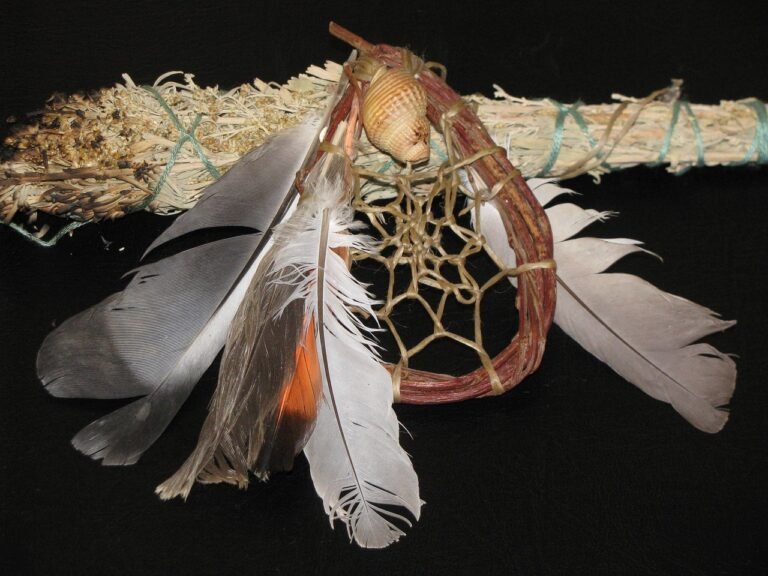
    Dreamcatchers are globally popular – as decor, jewelry, or fashion. Yet their origins lie with the Ojibwe (Anishinaabe) of North America, where they are more than decorative objects. They carry spiritual meaning, protective functions, and stories connecting humans and nature. 🌿 Origins of Dreamcatchers The Ojibwe traditionally made dreamcatchers from willow hoops, nets, and feathers….

    Read More 🕸️ Dreamcatcher Myth vs. Reality: The Cultural Appropriation of an Ojibwe SymbolContinue

  • Indigenous Culture: 🌀 Spiritualität im Alltag indigener Kulturen
    Indigenous Spirituality | Religion and Spirituality | Shamanic Traditions

    🌀 Spirituality in the Daily Life of Indigenous Cultures

    ByWildflowerSoul January 26, 2026January 4, 2026

    For many indigenous peoples, spirituality is not a separate sphere but deeply woven into daily life. It shapes rituals, social relationships, observation of nature, and life decisions, creating a strong connection to community and environment. Historical Background In indigenous cultures, spirituality is often cyclical and nature-based. The world is seen as alive, with everything interconnected….

    Read More 🌀 Spirituality in the Daily Life of Indigenous CulturesContinue

  • Indigenous Culture: 🏕️ Freiheit ohne festen Ort – eine alte Idee
    Adventure & Tradition | Family time & traditions

    🏕️ Freedom Without a Fixed Place – An Ancient Idea

    ByWildflowerSoul January 24, 2026January 4, 2026

    In our modern world, freedom is often tied to possession: to one’s own house, one’s own property, one’s own address. Home is equated with a fixed point on the map. This view obscures an ancient, yet highly relevant form of freedom: the freedom of movement – not as aimless wandering, but as a conscious, cyclical…

    Read More 🏕️ Freedom Without a Fixed Place – An Ancient IdeaContinue

  • Indigenous Culture: 🚶 Mobile Kulturen vor der Moderne
    General | Adventure & Tradition

    🚶 Mobile Cultures Before Modernity

    ByWildflowerSoul January 23, 2026January 4, 2026

    Before modern times, many cultures lived a mobile lifestyle to optimally use resources, adapt to climate and environment, and preserve community. This way of life uniquely combined freedom, flexibility, and social responsibility. Historical Background Mobile cultures, often referred to as nomads, moved in fixed yearly or seasonal cycles. Their lifestyle was closely linked to hunting,…

    Read More 🚶 Mobile Cultures Before ModernityContinue

  • Indigenous Culture: 🍃 Warum Genügsamkeit kein Verzicht ist – Indigene Weisheit für ein erfülltes Leben
    Adventure & Tradition | Family time & traditions

    🍃 Why Sufficiency Is Not Sacrifice – Indigenous Wisdom for a Fulfilling Life

    ByWildflowerSoul January 22, 2026January 4, 2026

    In a world that equates “more” with “better,” sufficiency sounds like a sad compromise: like sacrifice, restriction, and missing out on life. Yet indigenous cultures teach us a radically different perspective. For them, sufficiency (often called the “Principle of Enough” or “Suffiency”) is not a philosophy of lack, but a practice of intelligent abundance. It…

    Read More 🍃 Why Sufficiency Is Not Sacrifice – Indigenous Wisdom for a Fulfilling LifeContinue

Page navigation

Previous PagePrevious 1 … 5 6 7 8 9 … 26 Next PageNext
  • Facts about Native Americans
    • Notable Figures
  • Native American Tools
    • Dreamcatcher
    • Drums
  • Deutsch
  • English

© 2026 Native Roots

Native Roots
  • Facts about Native Americans
    • Notable Figures
  • Native American Tools
    • Dreamcatcher
    • Drums
关于我们.