The Lakota: History, Spirituality and Culture of a Great Plains Nation
Reading time: approx. 7 minutes
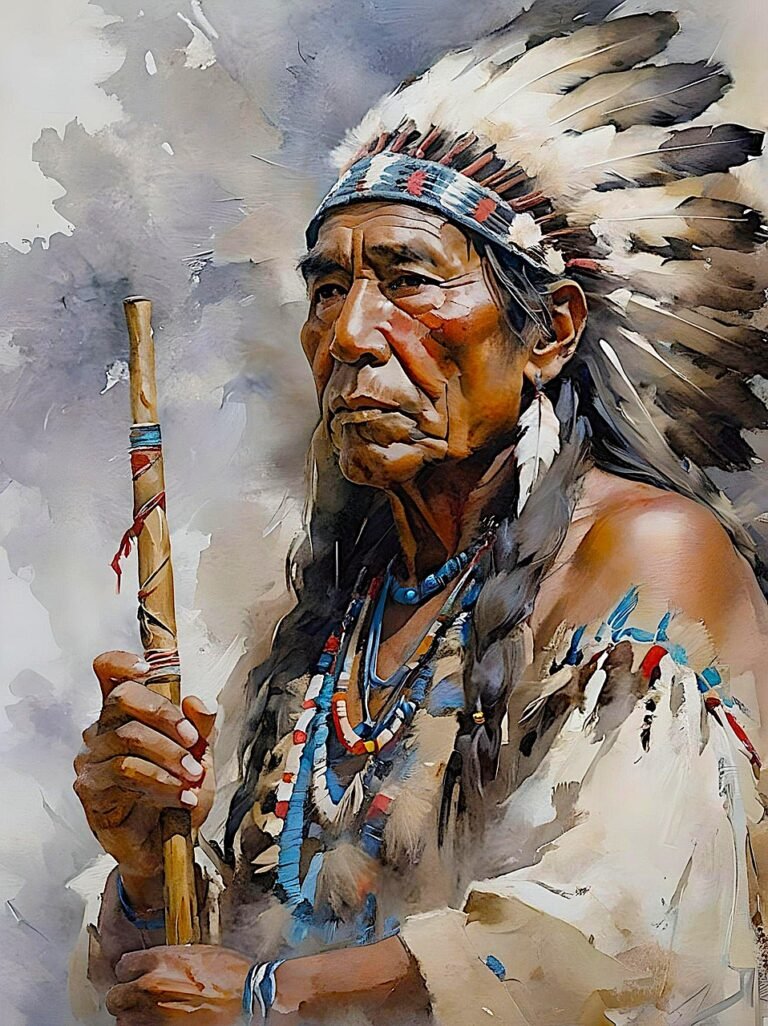
When people think of the indigenous peoples of North America, a particular image often comes to mind: riders on a vast prairie, eagle feathers in the wind, the sound of drums carrying across the plains. That image is incomplete — but it has a real foundation, and it belongs to a specific people: the Lakota. No tribe has been more thoroughly turned into a symbol for “the Native American” in Western culture. And no tribe has suffered more under that symbolism.
This article tells the story of the Lakota — their origins, their flourishing on the Great Plains, the violent destruction of their way of life in the 19th century, and their continuing cultural vitality into the present day.
Who Are the Lakota?
The Lakota are part of the Great Sioux Nation, which is composed of three main groups: the Lakota (also known as Teton Sioux), the Dakota, and the Nakota. All three speak related but distinct languages and share a common cultural heritage. The Lakota are the westernmost and largest group, and they traditionally lived on the Plains — the vast grasslands stretching from the Missouri River in the east to the Rocky Mountains in the west.
Within the Lakota, there are seven sub-groups collectively known as the Oceti Sakowin — the Council of Seven Fires. These include the Oglala, the Brulé (Sicangu), the Hunkpapa, and the Miniconjou, among others. Each group has its own history and its own leaders, some of whom became famous in the history of North America — including Sitting Bull, Crazy Horse, and Red Cloud.
Life on the Great Plains
The Lakota were not sedentary farmers but nomadic hunters. The heart of their way of life was the American bison — tatanka in the Lakota language. Before European settlement, an estimated 30 to 60 million bison roamed the Great Plains. For the Lakota, the bison was not only a food source but the center of their entire existence: its meat fed the community, its hide became clothing, tipi covers, and sleeping mats, its bones were fashioned into tools, and its organs served as containers.
The horse transformed Lakota life fundamentally. Originally native to North America, horses had gone extinct after the last ice age and were reintroduced through Spanish colonization. By the 18th century, the Lakota had fully embraced horse culture and became among the most skilled riders in the world. This enabled faster bison hunts, wider-ranging migration, and far more effective warfare when necessary.
Lakota social structure was built on community and reciprocity. Decisions were made in council, and chiefs held advisory authority rather than absolute power. The concept of Mitákuye Oyásʼiŋ — “We are all related” — describes a worldview in which humans, animals, plants, and the earth itself are understood as members of a single family.
Spirituality: Wakan Tanka and the Ceremonies
At the center of Lakota spirituality is Wakan Tanka — often translated as “Great Spirit” or “Great Mystery.” Wakan Tanka is not a personal deity in the Western sense, but an all-encompassing spiritual force that permeates all things. Lakota spirituality is deeply rooted in nature: mountains, rivers, animals, and celestial bodies are not inert matter but living beings with their own power and significance.
Among the most important Lakota ceremonies is the Sun Dance — a multi-day ritual of fasting, dancing, and spiritual offering that continues to be practiced today. Equally significant is the Inipi, or sweat lodge — a purification ritual that combines physical and spiritual renewal. The pipe ceremony involving the sacred pipe (čhaŋnúŋpa) is considered one of the holiest practices, connecting the Lakota to Wakan Tanka and to the community of all living beings.
Many of these ceremonies were banned by the US government in the late 19th and early 20th centuries — an attempt to destroy Lakota cultural and spiritual identity. Only in 1978, with the American Indian Religious Freedom Act, did indigenous peoples in the United States gain the legal right to practice their religious traditions freely.
Conflict, Loss and Resistance
The 19th century brought catastrophe to the Lakota. As white settlers pushed westward, bison herds were systematically destroyed, and a series of imposed treaties were broken almost as soon as they were signed. The Fort Laramie Treaty of 1868 had guaranteed the Lakota the Black Hills — Pahá Sápa, a sacred land — but when gold was discovered there, the US government broke the treaty.
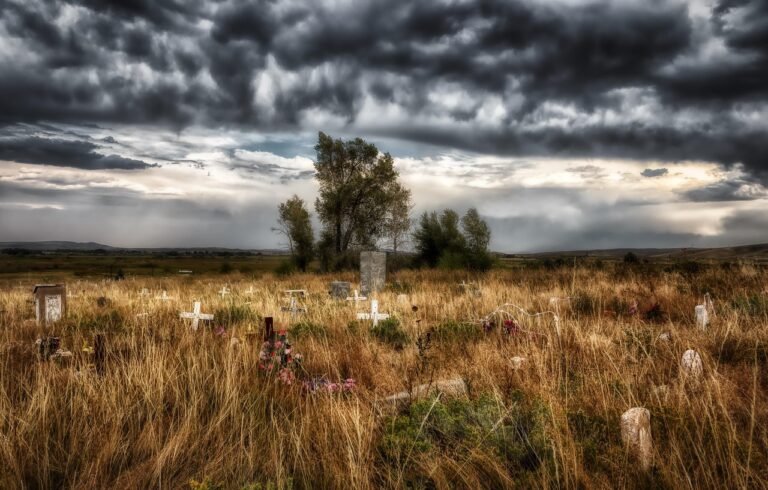
The wars of the 1860s through 1880s, including the Battle of Little Bighorn (1876) — where the Lakota under Sitting Bull and Crazy Horse dealt a devastating defeat to General Custer’s forces — represent one of the last major acts of resistance against American territorial expansion. The Massacre at Wounded Knee (1890), in which US soldiers killed more than 250 Lakota — the majority of them women, children, and elders — marks one of the darkest chapters of this history.
The struggle over the Black Hills continues to this day. In 1980, the US Supreme Court acknowledged that the Black Hills had been unlawfully seized and awarded financial compensation — which the Lakota have refused to accept. They do not want money. They want their land returned.
The Lakota Today
Today, an estimated 170,000 people of Lakota descent live in the United States, many of them on reservations in South Dakota and North Dakota. The Pine Ridge Indian Reservation, home of the Oglala Lakota, is one of the poorest regions in the entire United States — with high unemployment, inadequate healthcare, and low life expectancy. At the same time, cultural and spiritual life remains vibrant: the Lakota language is being revitalized, ceremonies are being passed down to new generations, and political movements like the Standing Rock protests of 2016 show that the Lakota continue to defend their rights and their land with determination.
Frequently Asked Questions About the Lakota
What does the name Lakota mean?
Lakota means roughly “friends” or “allies” in their own language. It describes a people for whom community and mutual support are central values.
What is the difference between Lakota, Dakota, and Sioux?
Sioux is a collective name of French origin, derived from a derogatory Ojibwe term. The three groups — Lakota, Dakota, and Nakota — prefer their own names. The term Sioux is now generally considered outdated.
What does Mitákuye Oyásʼiŋ mean?
This Lakota phrase is often translated as “We are all related.” It expresses a worldview in which all living beings — humans, animals, plants, the earth — are seen as part of one interconnected family.
Where do the Lakota live today?
Most Lakota live on reservations in South Dakota and North Dakota, including Pine Ridge, Rosebud, and Standing Rock. These communities face significant social and economic challenges alongside a living cultural tradition.
This article is intended solely for educational and informational purposes. Native Roots has no commercial affiliation with any indigenous organization.