👑 Was Pocahontas Really a Princess? The Shocking Truth Behind the Disney Myth
Hardly any figure in North American history is as well known – and as thoroughly falsified – as Pocahontas. A brave girl with flowing hair who falls in love with an English explorer and reconciles two cultures: that is what Disney has been telling us since 1995. The real story is the exact opposite. It is a story of abduction, trauma, and political instrumentalization – and of a young life that ended at 21 in a foreign country. And it is one of the most important stories to know about the colonization of North America.
🪶 Who Was She Really? Name, Origins, Meaning
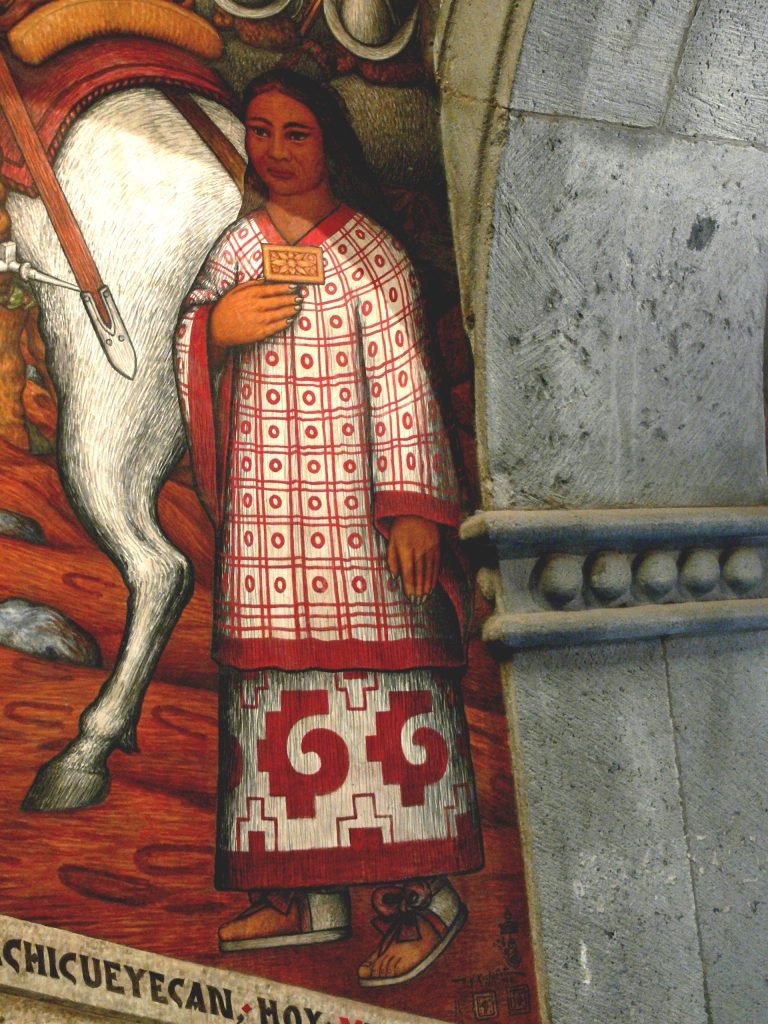
Her real name was Amonute. Her secret, spiritual name was Matoaka – some sources translate it as “flower between two streams.” The name the world knows her by originally belonged to her mother, who died giving birth to her. Her father, the powerful chief Wahunsenacawh (also known as “Powhatan”), lovingly called his favorite daughter Pocahontas after that – a nickname meaning roughly “the naughty one” or “the ill-behaved child.” A playful, spirited child – not a fairy-tale title.
Native Inspiration & Wisdom



She was born around 1596 in the region of present-day Virginia, within the territory of the Powhatan Confederacy: an alliance of roughly 30 Algonquian-speaking tribes along the Chesapeake Bay. Her father was indeed a kind of king of this confederacy. Does that make her a princess? Not in any European sense. In the Powhatan system there was no hereditary monarchy and no noble title. Chiefs led through merit, consensus, and spiritual authority – not bloodline. The term “princess” was projected onto her by English colonizers because it made sense in their own categories – not in those of the Powhatan.
🎬 What Disney Shows – and What Actually Happened
John Smith: Romantic Hero or Armed Intruder?
In the Disney film, John Smith is a handsome, blond explorer whom Pocahontas meets as his contemporary. The historical reality: John Smith came to her town when she was only 9 or 10 years old, while he was 27 years old. The two were never romantically involved. Smith was no gentle hero either: he was known to enter villages and hold various chiefs of tribes at gunpoint, demanding food and supplies.
The famous scene in which Pocahontas saves him from execution? John Smith claimed Pocahontas saved him from execution when she was just 11 or 12 years old. Whether the story happened the way Smith tells it – or even at all – is up for debate. Smith wrote about it only 17 years later, when few eyewitnesses remained to dispute his account. Most historians now believe he either misinterpreted a ritual ceremony or fabricated the episode entirely.
The First Marriage – Which Disney Omits Completely
When Pocahontas was around 14 or 15, she married Kocoum, a young warrior of the Potowomac tribe. Pocahontas and her husband Kocoum initially lived in the Werowocomoco Village. She was a wife – possibly already a mother – when disaster struck. Of this marriage, of Kocoum, of this life: not a single word from Disney.
⛓️ The Abduction: What Really Happened
In 1613, English Captain Samuel Argall lured Pocahontas onto his ship under false pretenses. She was then transported to Jamestown. As ransom, English settlers demanded corn, the return of prisoners and stolen items, and a peace treaty.
What followed was no romantic adventure. Kocoum was murdered by colonists shortly after her abduction. While captive in Jamestown, Pocahontas was raped by possibly more than one colonist. She grew into a deep depression.
Powhatan waited three months after learning of his daughter’s capture to return seven English prisoners and some stolen guns. He refused other demands, however, and relinquished his daughter to the English, agreeing to a tenuous peace.
✝️ Forced Conversion, Marriage, and the “Peace Princess”
In captivity, Pocahontas was instructed in Christian doctrine by the Protestant minister Reverend Alexander Whitaker. It is also likely that Pocahontas felt she had to assume a new identity as a matter of survival. She was baptized with the name Rebecca.
Shortly afterward she married tobacco planter John Rolfe. The story of Pocahontas marrying Rolfe for love is highly unlikely, especially considering Rolfe was under great financial pressure to somehow forge an alliance with the Powhatan to learn their secret tobacco curing techniques. The marriage officially ended the First Anglo-Powhatan War – Pocahontas was the political instrument of peace, not its free architect.
🚢 London: Displayed as a “Tamed Savage”
In 1616, Pocahontas traveled with Rolfe to England. The purpose was openly propagandistic: the company decided to bring Pocahontas to England as a symbol of the tamed New World “savage” and the success of the Virginia colony.
In London she met King James I and Queen Anne at a court ceremony. Though the English considered her an Indian princess, historian Helen C. Rountree argues there is no contemporaneous evidence suggesting Pocahontas was regarded in England as royalty – to most Englishmen she was merely a curiosity.
During this time she encountered John Smith again. Smith recorded that when Pocahontas saw him, she turned away and covered her face. No loving reunion. No joy. Quite the opposite. In the fragments Smith preserved of what she said, she reminded him of the promises he had made to her father – and broken.
💀 Death in a Foreign Land – and the Suspicion of Poisoning
In the spring of 1617, Pocahontas was to return to Virginia. She never arrived. In March 1617, Rolfe and Pocahontas boarded a ship to return to Virginia, but they had sailed only as far as Gravesend on the River Thames when Pocahontas became gravely ill. She was taken ashore, where she died from unknown causes, aged approximately 21.
Official causes of death: pneumonia, tuberculosis, smallpox. But the tribesmen who accompanied Pocahontas on the trip believed she was poisoned. She died shortly after dining with Rolfe and Argall – the same Argall who had once kidnapped her.
Her body was buried at St. George’s Church in Gravesend, England. Her father Wahunsenacawh, upon hearing of her death, died from grief less than a year later. Her son Thomas Rolfe grew up in England and later returned to Virginia as an Englishman.
🪞 What the Myth Conceals: The Political Function of the “Princess”
The romanticization of Pocahontas is no accident. It serves a precise ideological function: it tells the story of colonization as a voluntary encounter, a love story, a civilizational gift. If the daughter of the most powerful chief comes voluntarily to the English, loves them, and adopts their religion – then colonization was not violence. Then it was an invitation.
This version of events was constructed by English colonizers in the 17th century, cemented in the 19th century through paintings and plays, and globally disseminated by Disney in 1995. The result: millions of people know the name Pocahontas – but not the name Matoaka. Not the name Kocoum. Not the name Argall.
The Mataponi Tribe, descendants of Pocahontas’s own people, have preserved their own oral history across generations. Dr. Linwood “Little Bear” Custalow and Angela Daniel published in 2007 in The True Story of Pocahontas: The Other Side of History the oral tradition of their community – a story that differs fundamentally from the English version.
✅ What We Can Learn from Matoaka’s Life
- Names are power. The name Matoaka was deliberately kept secret by the English – because they believed enemies could gain spiritual power over someone whose real name they knew. The fact that the world knows her only as “Pocahontas” is itself an act of erasure.
- Always ask: whose story is being told? The story of Pocahontas was written exclusively by English men – Smith, Rolfe, Strachey. The Powhatan perspective was not documented until centuries later.
- Romanticization is a form of violence concealment. Turning an abduction into a love story is not harmless – it is the rewriting of trauma as entertainment.
- Her descendants are alive today. The Mattaponi and Pamunkey – tribes of the original Powhatan Confederacy – live in Virginia to this day as federally recognized tribes with their own governments and their own voices. Matoaka’s story is not history – it is the present.
- Real respect begins with real knowledge. Anyone who wants to honor indigenous cultures begins by knowing the true stories – not the ones that make colonialism comfortable.
❓ Frequently Asked Questions about the Real Pocahontas
How old was Pocahontas really when she met John Smith?
She was approximately 10 to 12 years old – John Smith was 27. There was never a romantic relationship between them. Smith wrote the rescue legend only many years later, when virtually no eyewitnesses remained to contradict him.
What does the name “Pocahontas” really mean?
“Pocahontas” was a nickname meaning roughly “the naughty one” or “the ill-behaved child.” Her real birth name was Amonute; her spiritual name was Matoaka – possibly meaning “flower between two streams.” The nickname had originally belonged to her mother.
Did Pocahontas really save John Smith’s life?
Almost certainly not – at least not as told. Most historians now believe Smith either misinterpreted a ceremony or invented the story. He himself did not mention it until 17 years after the alleged event.
Was her marriage to John Rolfe voluntary?
This is contested. After more than a year of captivity, forced conversion, and the murder of her first husband Kocoum, Pocahontas was in a situation where “voluntary” was hardly possible. Many historians and the oral tradition of the Mataponi Tribe describe it as a coerced union consistent with what we now call Stockholm Syndrome.
What did Pocahontas die of?
Officially of pneumonia or tuberculosis, aged approximately 21, in Gravesend, England, on March 21, 1617. The tribal members who accompanied her suspected poisoning – she died shortly after a dinner with those who had once abducted her.
Has Disney ever corrected the story?
No. The 1995 film and its 1998 sequel maintain the fictional love story. Pocahontas voice actress Irene Bedard (Métis/Inuit) and many indigenous historians have spoken publicly and critically about the portrayal. The film remains commercially successful – and historically a disaster.
🪶 Conclusion: Matoaka Deserves Her Real Name Back
The real Pocahontas was no princess in an animated film. She was Matoaka: a clever, courageous girl who grew up in one of the most brutal phases of the colonization of North America – who was abducted, traumatized, instrumentalized, and buried at 21 in a foreign land, far from her father, her people, her language.
Her life was not a love film. It was a testimony to what colonialism does to real people – with real names, real marriages, real children, real dreams.
Knowing the name Matoaka is the first step toward restoring the dignity that was always hers.
TribesNative.com – Where Tradition Meets Truth.