🌿 Healing Plant Myths & Facts: What Indigenous Cultures Really Knew – and What Science Confirms
In pharmacies worldwide there are products whose active ingredient foundations derive directly from the healing knowledge of indigenous peoples: aspirin from willow bark, echinacea from the prairies of the Plains peoples, quinine from the Amazon. At the same time, the internet is full of myths about “Indian miracle remedies” – from magical herbal teas to universal healing claims without any evidence. Between these extremes lies the actual truth: a millennia-old, highly precise knowledge system that modern science is gradually discovering, but which is also increasingly being destroyed. This article separates myth from fact – respectfully, precisely, and with an eye to what is at stake.
⚠️ The Alert Level: What Science Revealed in 2021
In 2021, a landmark study appeared in the prestigious Proceedings of the National Academy of Sciences (PNAS). Researchers Dr. Rodrigo Cámara-Leret and Prof. Jordi Bascompte of the University of Zurich analyzed three ethnobotanical databases from North America, the northwestern Amazon, and New Guinea – covering 3,597 medicinal plant species with 12,495 documented treatment applications across 236 indigenous languages.

I hate people
A companion for more mindfulness and inner strength.
Explore on AmazonTheir finding: Over 75 percent of the world’s plant medicine knowledge exists in only a single indigenous language. In North America, 86 percent of unique plant knowledge is stored in acutely endangered languages. In the northwestern Amazon: 100 percent. When the language dies – the knowledge dies. Forever. Even before the plant itself.
This means: the largest part of humanity’s medicinal plant knowledge is not documented in books, not stored in databases, not analyzed in laboratories. It lives in the minds and voices of elderly men and women in reservations, villages, and rainforests – and with every death, with every lost language, it disappears irretrievably.
🔴 Myth 1: “Indigenous Medicine Is Superstition”
FALSE – and refuted by decades of pharmacology.
The most persistent and dangerous misconception: indigenous healing practices are magic, hocus-pocus, at best placebo. The facts are unequivocally the opposite. Some of the most important medicines in modern healthcare have their direct origin in indigenous healing knowledge:
- Aspirin (acetylsalicylic acid): The pain-relieving properties of willow bark (Salix spp.) were known to Plains peoples, Iroquois, and Cherokee for centuries – they chewed the bark or prepared decoctions. The active compound salicin was isolated by German chemist Johann Büchner in 1828 and remains the basis of the world’s best-selling medication.
- Quinine: The malaria drug derives from cinchona bark (Cinchona), used by Quechua peoples in the Andes against fever since at least the 17th century. European missionaries learned it from them – without crediting them.
- Tubocurarine (curare): Amazonian indigenous peoples used arrow poison from plants of the genus Strychnos as a targeted muscle relaxant. Today the active compound is a foundation of modern anesthetic agents in surgery.
According to estimates by the U.S. National Cancer Institute, roughly 25 percent of all prescription drugs in the United States derive directly or indirectly from plant compounds – a substantial portion of which has its origin in traditional indigenous knowledge.
🔴 Myth 2: “Echinacea Being Used by Native Americans for Colds Is a Myth”
FALSE – echinacea is one of the best-documented indigenous healing plants in existence.
Echinacea angustifolia – the narrow-leaved coneflower of the Great Plains – was a core medicinal plant among the Lakota, Cheyenne, Comanche, Arapaho, and numerous other Plains peoples. Prof. Daniel E. Moerman of the University of Michigan documented in his standard reference Native American Ethnobotany (1998) over 462 plant species used medicinally by at least one North American tribe – echinacea leads the list in frequency of application.
Modern research confirms: clinical studies show immunomodulatory effects. A meta-analysis in Lancet Infectious Diseases (2007) found that echinacea preparations can reduce the risk of catching a cold by up to 58 percent and shorten cold duration by 1.4 days. No miracle cure – but an effective remedy with a millennia-long track record.
🔴 Myth 3: “Indigenous Medicine Was Always the Same – a Single Unified System”
FUNDAMENTALLY FALSE.
North America encompassed before colonization over 500 distinct nations, each with their own languages, ecosystems, and healing systems. What an Ojibwe healer at Lake Superior used differed fundamentally from what a Navajo Hataalii knew in the canyons of Arizona – or a Tlingit healer on the Alaskan coast.
Concretely: a plant sacred and healing for Tribe A may be unknown or even considered dangerous by Tribe B. The knowledge was precise, local, ecosystem-specific, and generationally deep. It was not a uniform “Indian medicine” – it was a diversity of systems as different as the landscapes in which they arose.
🟡 Myth 4: “All Indigenous Healing Plants Are Safe and Natural”
CAUTION – “natural” does not automatically mean “safe.”
Indigenous healers knew very well: not every plant that heals is harmless. Many of the most powerful healing plants are toxic in the wrong dose. Knowledge of dosage, preparation, and contraindications was just as much part of the system as knowledge of the effect itself.
- Black cohosh (Cimicifuga racemosa): Used by the Cherokee and Iroquois for women’s conditions and menopausal complaints – scientifically confirmed. But: contraindicated in high doses or with liver disease. Frequently marketed uncritically as a natural product.
- Tobacco (Nicotiana spp.): Ceremonial plant used as spiritual offering and in small quantities medicinally. As a mass product for daily inhalation: one of the deadliest substances in history. The knowledge of the difference – sacramental use vs. addiction – was entirely lost in commercialization.
- Peyote (Lophophora williamsii): Ceremonial plant with a precise ritual protocol. Consumed outside this context, without guidance and preparation, the effects can be destabilizing. The ceremonial protocol is part of the dosing.
🟡 Myth 5: “Indigenous Healers’ Knowledge Is Already Fully Documented”
ONLY A FRACTION – and that is the real catastrophe.
The University of Zurich study (PNAS, 2021) makes clear: the vast majority of plant medicine knowledge has barely been pharmacologically researched at all. Of the 3,597 documented medicinal plants in the study, most were barely scientifically investigated. And those are only the plants already recorded in ethnobotanical studies – an unknown number remain completely undocumented.
What has not been documented is often the most precise detail: the exact season of harvest, the processing step, the preparation context, the accompanying prayer that was part of the healing protocol.
🟢 Facts That Science Has Confirmed
White Sage (Salvia apiana) – Antimicrobial
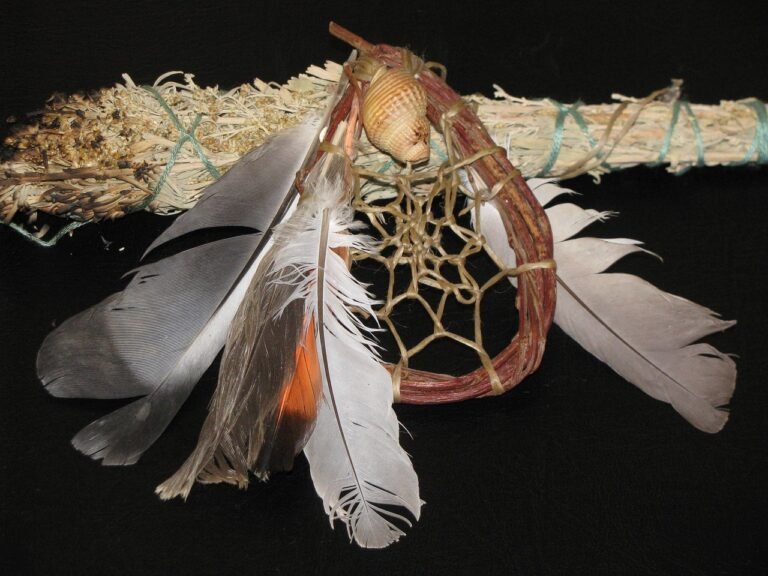
A study in the Journal of Ethnopharmacology (2007) documented: the smoke from burning herbal mixtures including white sage reduces airborne bacteria in a room by up to 94 percent – and the antimicrobial effect persists for up to 30 days. What was understood as a spiritual purification ritual was also microbiologically precise.
Yarrow (Achillea millefolium) – Blood Stopping
Yarrow was used by over 30 different indigenous groups of North America for wounds, bleeding, and inflammation. Modern pharmacology has identified the active compounds: achilleine, flavonoids, and essential oils with documented hemostatic, anti-inflammatory, and antimicrobial effects. The knowledge was not intuitive – it was empirical, tested and refined across generations.
Goldenseal (Hydrastis canadensis) – Broad-Spectrum Antimicrobial
Used by the Cherokee and other peoples of eastern North America for infections, eye inflammation, and wounds. Its main active compound berberine was scientifically isolated in the 20th century and shows antibacterial, antiprotozoal, and immune-stimulating effects in clinical studies. The plant is now on the Red List due to overexploitation – a direct result of globalized demand for a compound whose value indigenous knowledge keepers always knew.
🚨 The Biopiracy Problem: When Corporations Harvest What Peoples Planted
Here lies the real scandal. Indigenous peoples developed this knowledge over centuries, nearly lost it through colonization, and now watch as pharmaceutical companies patent the same knowledge – without consent, without compensation.
The most famous example: The Neem Patent. The neem tree (Azadirachta indica) has been used in Indian folk medicine for millennia as a fungicide, insecticide, and remedy. In 1994, U.S. company W.R. Grace Co. patented a neem extract as an “invention” – despite the fact that knowledge of its properties had been documented for centuries. After international protest and a lawsuit by the Indian government and NGOs, the patent was partially revoked in 2000.
The Nagoya Protocol (2010) on the Convention on Biological Diversity attempts to address this through an international framework for “Access and Benefit Sharing.” Implementation remains patchy – but it is a first step.
🌍 What Is at Stake: The Silent Catastrophe
The University of Zurich researchers stated plainly: “The projected loss of up to 30 percent of indigenous languages would substantially reduce humanity’s chances of medical discoveries.” What is being lost is not only cultural heritage – it is medical capital belonging to all of humanity.
In North America, fewer than 20 percent of the original diversity of indigenous languages are estimated to still be living today – and of these, many are spoken fluently only by elderly people. With every generation of elders that passes, a pharmacological archive is lost that no laboratory and no AI system can reconstruct.
✅ Practical Wisdom: How to Engage with Indigenous Plant Knowledge Respectfully
- Buy ethically. White sage, pau d’arco, echinacea – buy where possible from indigenous or fairly certified producers. Find out who profits.
- Distrust miracle cure claims. No single remedy cures everything. Indigenous healers knew this – their system was precise and targeted at specific complaints, not universal healing claims.
- Consult medical professionals for serious conditions. Traditional healing plants can work complementarily – they are not a substitute for diagnosis or life-saving medication.
- Support language preservation. Organizations like First Voices (Canada) and the Endangered Language Fund (USA) document endangered languages – and the healing knowledge encoded within them.
- Read primary sources. Daniel E. Moerman: Native American Ethnobotany (1998). Robin Wall Kimmerer: Braiding Sweetgrass (2013). Kat Anderson: Tending the Wild (2005).
- Recognize biopiracy when you see it. When a company markets a “new” natural remedy that peoples have used for centuries without naming or compensating them – that is not coincidence, that is theft.
- Learn before you harvest. Many healing plants are threatened by overexploitation. Goldenseal, white sage, wild ginseng – check local protection rules before harvesting or buying.
❓ Frequently Asked Questions about Indigenous Plant Medicine Knowledge
Where does aspirin really come from?
The pain-relieving properties of willow bark were known to numerous indigenous peoples of North America and Europe for centuries. The compound salicin was chemically isolated in 1828 by Johann Büchner; synthetic acetylsalicylic acid (aspirin) was developed in 1897 by Felix Hoffmann at Bayer. The origin lies in folk medicinal knowledge – the pharmaceutical patent with a German chemical company.
Is echinacea really effective or just placebo?
Clinical efficacy is documented – though it varies by preparation, concentration, and echinacea species. A meta-analysis in Lancet Infectious Diseases (2007) showed a significant reduction in cold risk and duration. Not a miracle cure, but a scientifically recognized immune tonic with millennia-old roots.
What does biopiracy mean concretely?
Biopiracy refers to the appropriation and commercialization of plants, animals, or active compounds whose use knowledge traditionally belongs to indigenous communities – without their consent and without financial participation. The Neem Patent (1994) and the Hoodia case are the most famous examples. The Nagoya Protocol (2010) attempts to regulate this internationally.
Can I use indigenous healing plants myself?
Generally yes – but with knowledge. Many indigenous healing plants such as echinacea, yarrow, or peppermint are well documented and safe in normal quantities. For lesser-known plants: always check dosage, contraindications, and local protection regulations. For serious conditions, always seek medical advice.
Why is plant medicine knowledge disappearing so quickly?
Because it is transmitted almost exclusively orally – and because the languages in which it lives are dying. The University of Zurich study (PNAS, 2021) documents: 75 percent of the world’s plant medicine knowledge is recorded in only a single indigenous language. When that language dies, the knowledge dies – even if the plant itself still grows.
Which organizations concretely protect indigenous healing knowledge?
At international level: the Convention on Biological Diversity (CBD) with the Nagoya Protocol (2010). Research initiatives: First Voices (Canada), Endangered Language Fund (USA), and the Ethnobotany research of Prof. Moerman at the University of Michigan.
🌿 Conclusion: The World’s Wisest Pharmacopoeia Is Disappearing
Indigenous peoples developed over millennia the most comprehensive, best-tested, and most ecosystem-specific plant medicine knowledge in human history. It is not superstition. It is empirical science – only encoded in a form that Western research is only just learning to read.
Aspirin, quinine, echinacea, curare – modern medicine owes more to indigenous healing knowledge than it admits. At the same time, the languages in which the rest of this knowledge lives are dying daily. Every generation of elders that passes is the loss of a medical archive that no laboratory and no AI system will ever be able to reconstruct.
That is not only a cultural tragedy. It is a medical one.
TribesNative.com – Where Tradition Meets Truth.