🌙 The Role of Dreams in Indigenous Cultures – Message, Vision, and Sacred Bridge Between Worlds
For many indigenous peoples of North America, sleep is not a passive interruption of life – it is a continuation of it, in another dimension. Dreams are not regarded as random fireworks of the unconscious, but as messages from the spirit world, the ancestors, and the cosmic order. They provide guidance for healing, hunting, warfare, harvest seasons, and personal life-path decisions. This understanding is embedded in hundreds of unique cultures – from the forests of the Northeast to the prairies of the Plains, from the coasts of the Pacific to the canyons of the Southwest. This article ventures deep into one of the most fascinating, least understood dimensions of indigenous knowledge.
🌎 Historical Overview: Dreams as the Foundation of Indigenous Worldviews
The understanding of dreams as spiritually significant events is no marginal phenomenon in indigenous cultures – it stands at the center. Already during the first contacts between European explorers and missionaries in the 16th and 17th centuries, observers were astonished and often unsettled by the depth with which indigenous peoples integrated dreams into social and ceremonial life.
Native Inspiration & Wisdom




The Jesuit Jean de Brébeuf, who missionized among the Wendat (Huron) in present-day Ontario from 1625, recorded in his Jesuit Relations that the Wendat believed the soul expressed its deepest desires in dreams – and that these desires must be fulfilled to preserve the person’s wellbeing. He called this system “the great deity” of the Wendat. Though he condemned it as pagan, he unwittingly described a highly developed psychological and spiritual system far ahead of the European thought of his time.
Following the introduction of the Indian Religious Crimes Code (1883) and the banning of numerous ceremonies, dream rituals were also suppressed. Boarding schools forbade children from sharing dreams with elders or speaking about them in their mother tongue. The survival of these practices is a testament to the resilience of indigenous communities.
🌀 Cosmology of the Dream: When the Soul Travels
In many indigenous cosmologies of North America, the human soul is not bound to the body. During sleep, a part of the soul – called Ojichaag among the Ojibwe, Nagi among the Lakota – leaves the physical body and travels to other planes of existence.
These journeys can lead to:
- The spirits of the ancestors, who convey counsel or warnings
- The animal helpers (Animal Spirits / Spirit Helpers), who bestow strength and abilities on the dreamer
- The plant spirits, who reveal healing knowledge
- The Great Spirit himself (Wakan Tanka among the Lakota, Gitchi Manitou among the Ojibwe), in rare, transforming visions
Crucially: these journeys are understood not as subjective experience, but as objective reality on another plane. The dreamer returns with real knowledge – knowledge that is examined, shared, and translated into action.
🏕️ Tribe-Specific Dream Traditions Compared
The Haudenosaunee (Iroquois): The Dream Festival and the Wishes of the Soul
No other North American people developed as elaborate a social dream culture as the Haudenosaunee – the Iroquois Confederacy (Mohawk, Onondaga, Cayuga, Seneca, Oneida, Tuscarora). Their system of Ondinnonk – the “hidden wishes of the soul” – established that unfulfilled dreams could lead to illness, social conflict, or even death.
At the winter festival Onnonhouarori, also known as the “Dream Guessing Ceremony,” people moved through the village posing riddles derived from their dreams. The community was obligated to guess and fulfill these dream wishes – whether they concerned objects, actions, or ceremonial activities. Anthony Wallace, anthropologist at the University of Pennsylvania, analyzed this system in his groundbreaking 1958 essay Dreams and the Wishes of the Soul and found that the Haudenosaunee practiced a form of psychological self-knowledge remarkably similar to – and predating – the modern depth psychology of Freud.
The Lakota Sioux: Hanbleciya – The Vision Quest
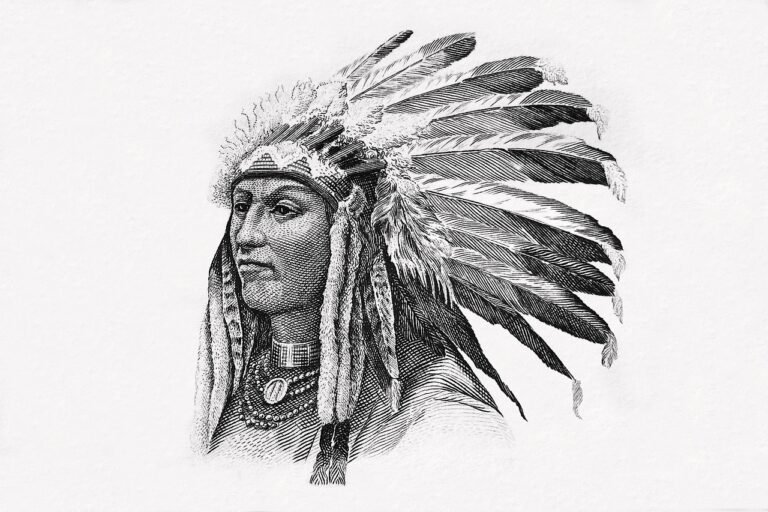
Among the Lakota of the Great Plains, Hanbleciya (literally: “crying for a vision”) is the institutionalized form of conscious dream reception. A seeker – often a young man or woman at the threshold of adulthood, but also adults in times of crisis – goes alone to a mountain or into the wilderness. Without food, often dressed only in a buffalo robe, they fast for four days and four nights and pray for a vision.
The dreams and visions received are then shared with a Wichasha Wakan (Holy Man) or Wichasha Wakan Win (Holy Woman), who interprets what was received and places it in the context of the seeker’s life. Black Elk (Hehaka Sapa, 1863–1950) described his first great vision at the age of nine as the defining event of his entire life – it contained complex cosmic symbols he fully understood only as an adult. John G. Neihardt preserved this in 1932 in Black Elk Speaks, one of the most influential works on indigenous spirituality of the 20th century.
The Ojibwe (Anishinaabe): The Dreamcatcher and the First Vision
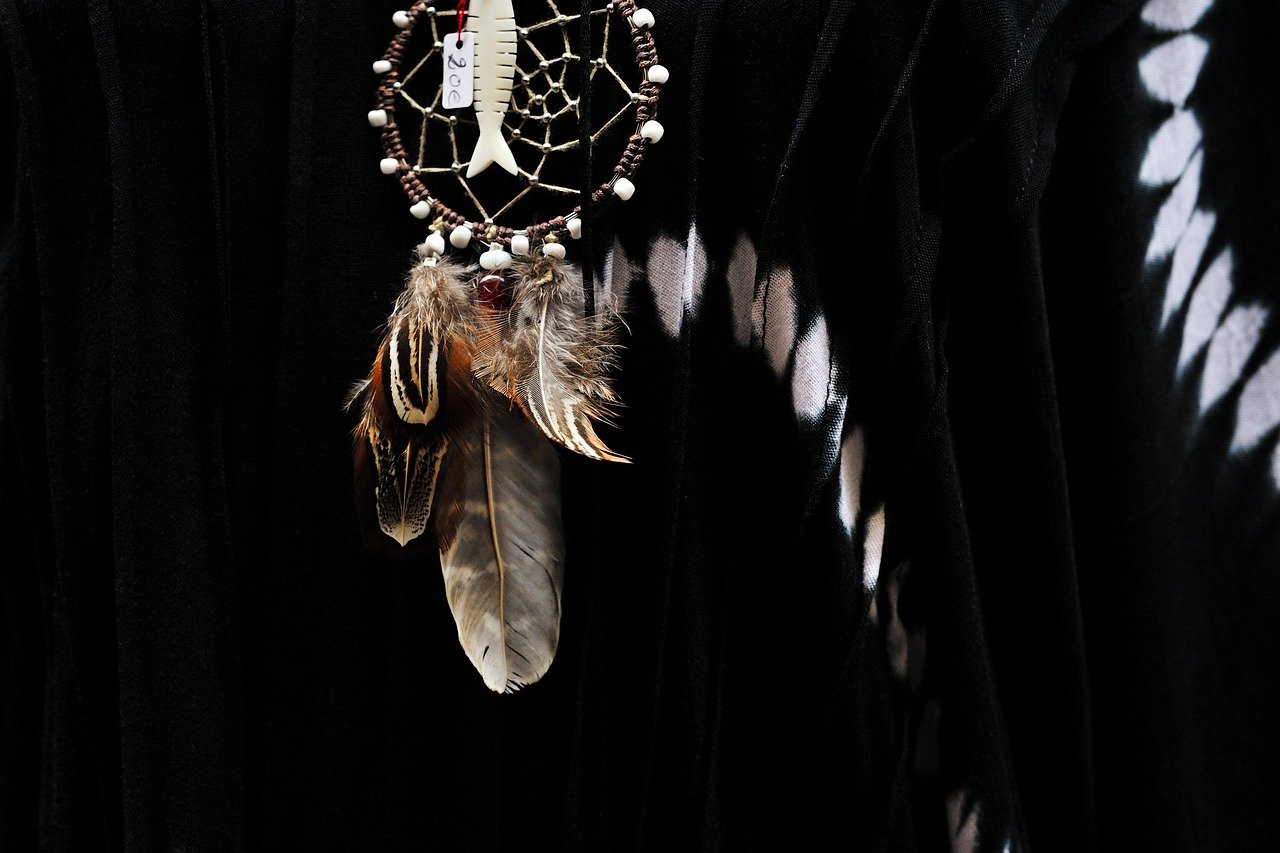
The Ojibwe (also Chippewa or Anishinaabe) of the Great Lakes region created the now world-famous symbol of the Asabikeshiinh – the dreamcatcher. Originally a small woven hoop was hung above the sleeping place of infants. According to legend, the web filters out bad dreams – they become caught and are destroyed by the morning light – while good dreams slide through the opening at the center to the sleeping child.
The dreamcatcher is historically documented in reports from the early 19th century onward. Ethnologist Frances Densmore documented it in 1910 in her comprehensive study Chippewa Music as part of a broader dream protection system. Importantly: the dreamcatcher is a sacred object of a specific tradition – its mass commercial spread since the 1970s is regarded by many Ojibwe elders as cultural appropriation.
More central to the Ojibwe system, however, is the child’s first dream vision at the onset of adolescence: the Vigil or Vision Fast. Here, a child withdrew into the wilderness and fasted until a protective spirit – a Manidoo – appeared in a dream and introduced itself as a lifelong companion. This first vision shaped the spiritual identity of the individual until death.
The Navajo (Diné): Dreams as a Diagnostic Tool
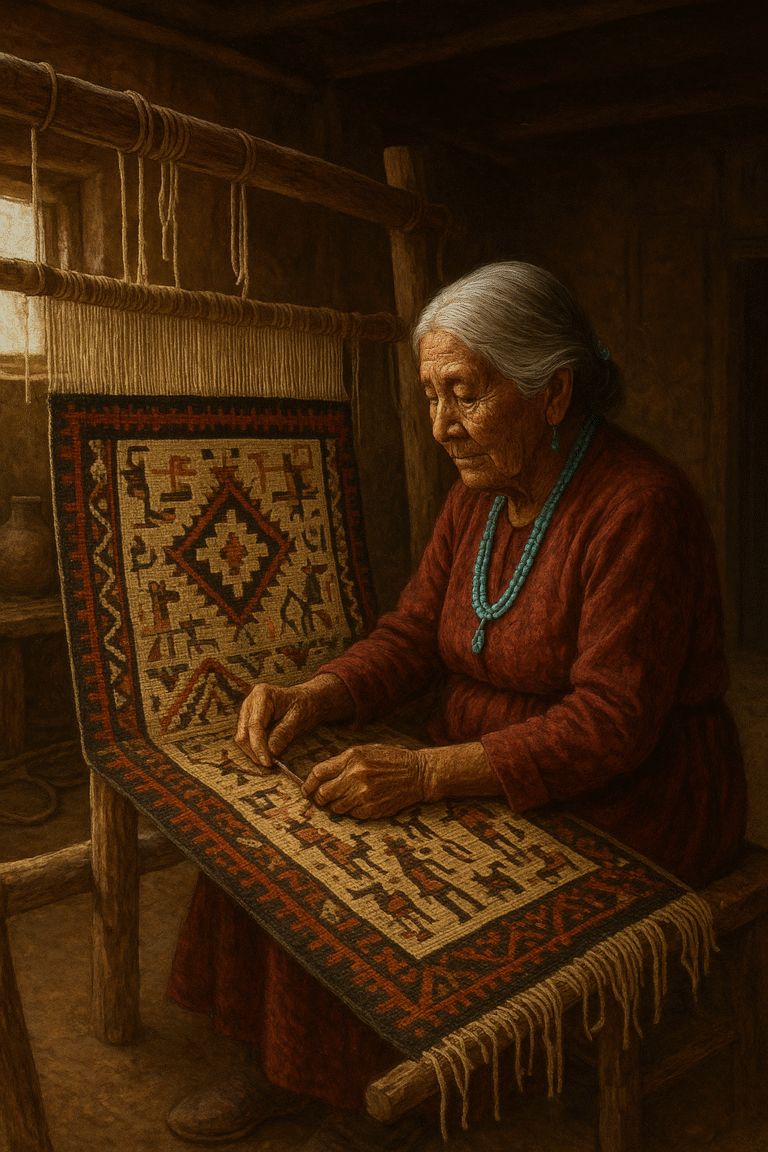
Among the Navajo of the Southwest, dreams are closely linked to the concept of Hózhó – balance, beauty, and harmony. Disturbing or recurring dreams are regarded as signs that harmony has been disrupted and that a healing ceremony (Chant or Sing) is needed. A Hataalii (ceremonial master) is consulted, who uses the dream as a diagnostic tool to determine the appropriate multi-day healing ceremony – such as the Nightway Chant (Yei Bi Chei) or the Blessingway.
The Navajo explicitly distinguish between meaningful dreams (sinilye) and meaningless dreams. Meaningful dreams involve visits from ancestors, animal messengers, or cosmic beings and demand a ceremonial response.
The Cree: Dreams as Hunting Knowledge
Among the Cree of subarctic Canada, dreams play a dual pragmatic and spiritual role. Experienced hunters regularly reported being visited in dreams by a moose, caribou, or bear – the animal appeared and “offered itself.” This dream visit was understood as an actual visit by the animal’s spirit and simultaneously placed obligations on the hunter: ritually correct hunting, respectful treatment of the bones, prayers of gratitude. Adrian Tanner documented this system in detail in 1979 in Bringing Home Animals: Religious Ideology and Mode of Production of the Mistassini Cree Hunters.
🌟 The Figure of the Dream Keeper: Guardian Between Worlds
In many indigenous traditions there are specialized individuals who receive, guard, and interpret dreams – a kind of ceremonial dream keeper role:
- Among the Haudenosaunee: Certain healers (Hadewi) specialized in dream interpretation and led the Onnonhouarori ceremony.
- Among the Lakota: The Wichasha Wakan received and interpreted collectively significant dreams, particularly those concerning the people as a whole.
- Among the Achomawi (Pit River People) of Northern California: The Damaagome (dream healer) made contact with the causes of illness in dreams, receiving specific healing knowledge for individual patients.
- Among the Zuni of the Southwest: The Bow Priests received instructions for ceremonies and war actions in dreams.
🎬 Dreams in Film, Literature, and Popular Culture
The subject of indigenous dream traditions has also found its way into art, film, and literature:
- “Windwalker” (1980), dir. Keith Merrill – With Dustin Hoffman: one of the first Hollywood films to treat Lakota traditions – including dream visions – seriously, partly filmed in the Lakota language.
- “Black Elk Speaks” (1932/1979) by John G. Neihardt – Literary record of the visions of Oglala Lakota healer Black Elk, still a standard text of indigenous intellectual history.
- “Dreamkeeper” (2003), TV film (ABC) – Tells legends of various Plains peoples, including several rooted in dream visions. Co-produced with indigenous consultant involvement.
- “Atanarjuat: The Fast Runner” (2001), dir. Zacharias Kunuk – Inuit director: the first indigenous feature film, Golden Camera at Cannes, contains powerful dream sequences as narrative and spiritual hinges of the plot.
- Leslie Marmon Silko (Laguna Pueblo): Her novel Ceremony (1977) is woven through with dream visions as healing forces and is considered a milestone of indigenous world literature.
- N. Scott Momaday (Kiowa): His Pulitzer Prize-winning novel House Made of Dawn (1968) processes dream symbolism as a central motif of indigenous identity seeking.
🔬 Dreams and Science: What Research Tells Us
Western science was slow to take indigenous dream understanding seriously. Pioneers included:
- Carl Gustav Jung (1875–1961): Though no specialist in indigenous studies, Jung recognized in his encounters with Pueblo elders (notably Mountain Lake / Ochwiay Biano, Taos Pueblo, 1925) a fundamental critique of rationalist European consciousness. Mountain Lake told him: “We think the Americans are mad – they think with their heads. We think with the heart.” Jung’s concept of the collective unconscious was substantially influenced by these encounters.
- Anthony F. C. Wallace (1923–2015): His 1958 article Dreams and the Wishes of the Soul on the Haudenosaunee dream system is a classic text of psychological anthropology.
- Robin Wall Kimmerer (Potawatomi): In Braiding Sweetgrass (2013), she connects Western botany with knowledge transmitted through dreams and visions, structurally challenging the Western monopoly on knowledge.
Modern dream research (e.g. Stanley Krippner, Saybrook University) documents in cross-cultural studies that indigenous sleepers significantly more often report precognitive and therapeutic dream content than Western comparison groups – a finding that suggests cultural framing as an active factor in dream perception.
✅ Practical Wisdom: How to Approach Indigenous Dream Knowledge Respectfully
- Keep a dream journal: Record dreams immediately upon waking. Many indigenous traditions emphasize the importance of not letting dreams fade – they are messages that deserve attention.
- Distinguish between symbol and literalism: Indigenous dream interpretation is symbolic, not literal. A bear in a dream rarely means an actual bear – it stands for strength, healing, or protection.
- Seek community: In indigenous cultures, dreams were shared, not interpreted alone. Trusted conversation partners, dream circles, or spiritual guidance can help.
- Get to know primary sources: Black Elk Speaks, Ceremony by Leslie Marmon Silko, and Braiding Sweetgrass by Robin Wall Kimmerer are deep entry points into authentic indigenous dream knowledge.
- Respect ceremonial context: Hanbleciya and comparable vision quests are not wellness events. If you seek a fasting retreat or vision quest, look for authentic programs led by indigenous communities.
- Do not buy a commercialized dreamcatcher: The dreamcatcher is a sacred Ojibwe object. If you must, purchase only from indigenous artisans directly – or abstain entirely.
- Cultivate your own dream relationship: Sleep in darkness and quiet. Reduce screen time before bed. Meditate as you fall asleep with the intention of being open to messages.
❓ Frequently Asked Questions about Dreams in Indigenous Cultures
What does the vision quest (Hanbleciya) mean among the Lakota?
The Hanbleciya is a multi-day fasting ritual in the wilderness in which the seeker receives a dream vision through prayer, solitude, and physical deprivation. This vision – often an encounter with a spirit, animal, or ancestor – provides the seeker with orientation for their life and is shared with and interpreted by an experienced Wichasha Wakan.
What is the original purpose of the dreamcatcher?
The dreamcatcher (Ojibwe: Asabikeshiinh) was traditionally hung as a protective object above the sleeping place of infants. The web filters out bad dreams, which become trapped and dissolve in the morning light, while good dreams slide through the opening. It is a specific sacred object of the Ojibwe tradition, not a pan-indigenous symbol.
Did all indigenous peoples of North America hold the same beliefs about dreams?
No. North America encompassed over 500 distinct nations and cultural groups before colonization, each with their own dream traditions. What all share is a fundamental conviction that dreams are meaningful – but the specific cosmologies, rituals, and interpretive systems vary considerably.
Is there a connection between Jung’s archetypal theory and indigenous dream knowledge?
Carl Gustav Jung was deeply influenced by his encounters with Pueblo elders and recognized parallels between his archetypes of the collective unconscious and the universal dream symbols of indigenous cosmologies. Nevertheless, caution is warranted: Jung’s system is a Western model and cannot fully capture or replace indigenous knowledge.
What is the difference between a dream and a vision in indigenous cultures?
In many traditions, an ordinary dream (such as processing daily experiences) is distinguished from a spiritual vision. The latter is characterized by extraordinary clarity, emotional intensity, symbolic richness, and often the presence of non-human beings. The vision quest is expressly intended to receive this state.
Which books are recommended for deeper study?
Black Elk / John G. Neihardt: Black Elk Speaks (1932). Leslie Marmon Silko: Ceremony (1977). N. Scott Momaday: House Made of Dawn (1968). Anthony Wallace: Dreams and the Wishes of the Soul (1958). Stanley Krippner (ed.): Dreamtime and Dreamwork (1990).
🌙 Conclusion: The Dream as Sacred Bridge
In indigenous cultures of North America, dreams are not private, random phenomena – they are sacred bridges between the visible and the invisible, between the individual and the community, between the present and the depths of time. They are diagnostic tools, teachers, messages from the ancestors, and signposts for collective decisions.
In a world increasingly shaped by sleep deprivation, information overload, and spiritual disorientation, this millennia-old knowledge carries a timeless invitation: to pause, to listen inward, to dream – and to trust what is heard.
TribesNative.com – Where Tradition Meets Understanding.